Collective Notes @ Neun Kelche, Berlin (Image by Dittrich Schmick)

Collective Notes

Collaborative installation, Samuel Hertz & Maria Thrän

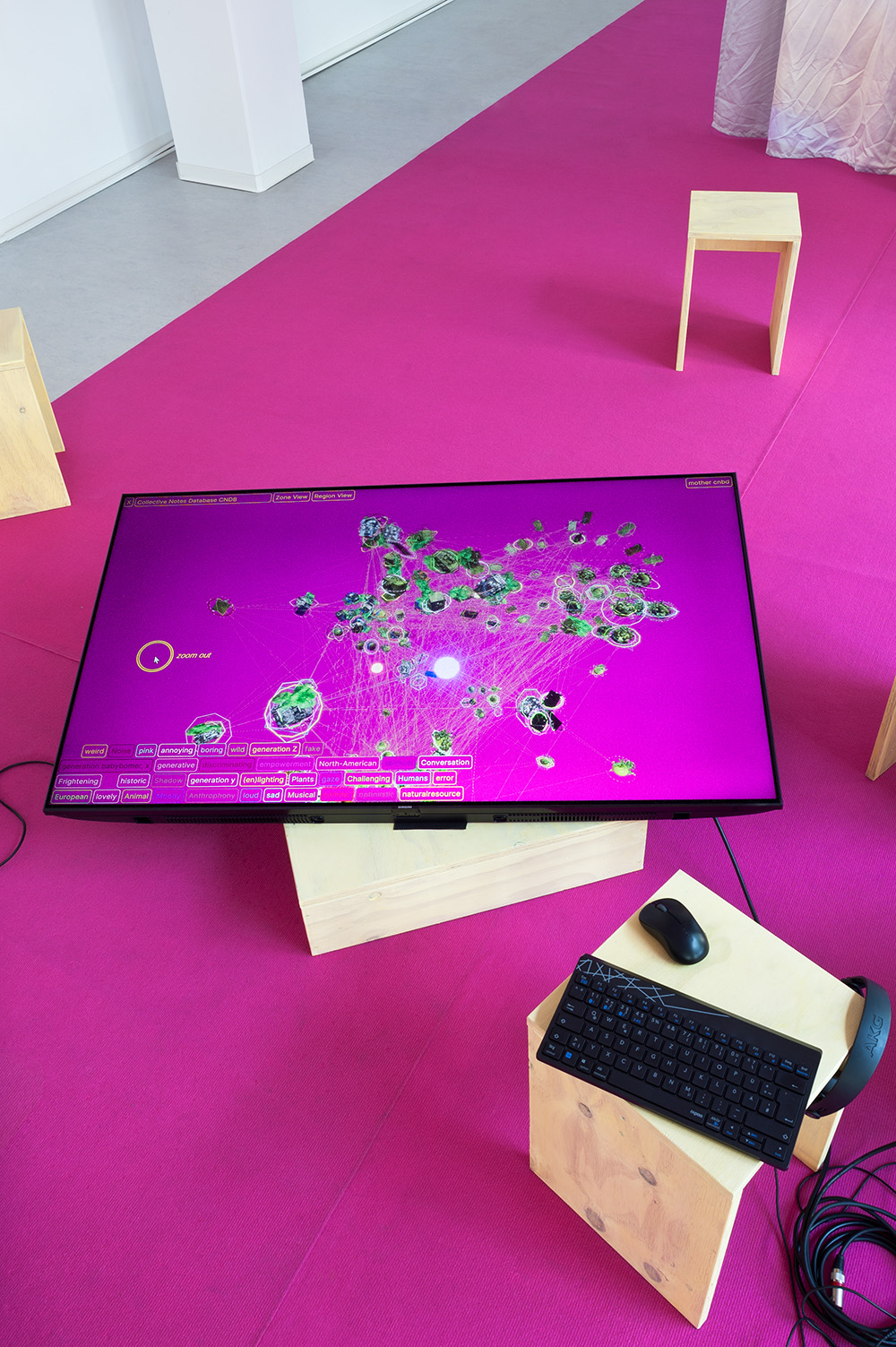
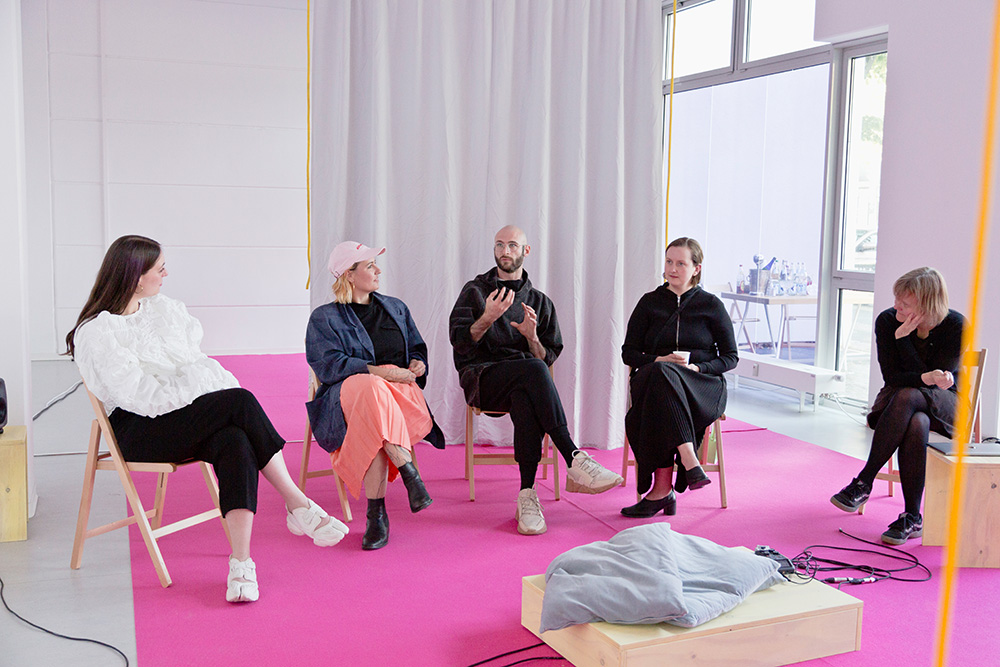
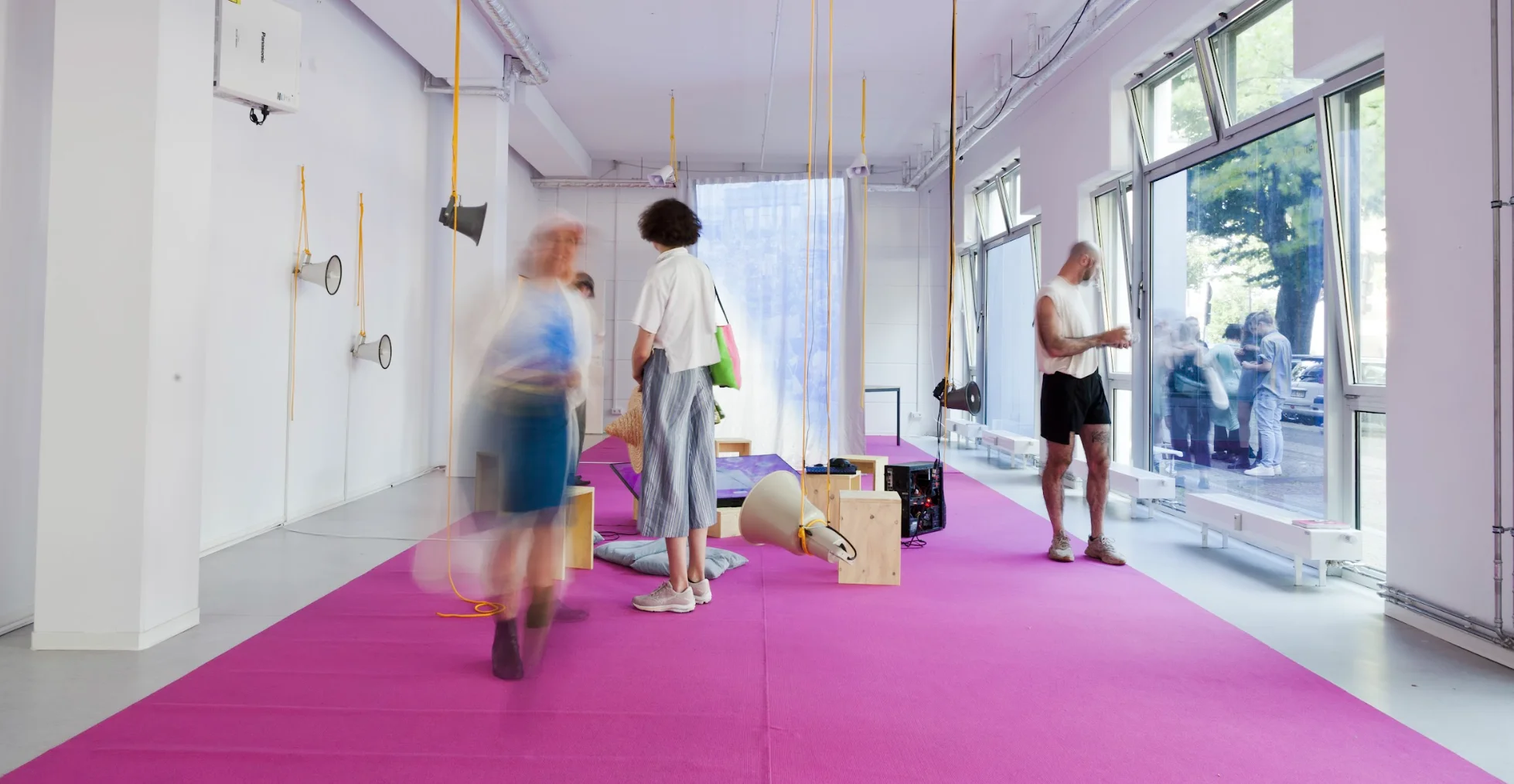
Samuel Hertz and Maria Thrän design soundscapes. In the project space Neun Kelche, they develop the collaborative installation Collective Notes, which is a walk-in archive of sound and video recordings and a shared workspace that provides insight into the creative process of the artists. A magenta-colored carpet runs through the space, marking its transformation into an artistic laboratory. Seating furniture, specially built by Thrän for the installation, is positioned on top of it, inviting visitors to listen, linger and have a discussion. The archive is created during the exhibition's runtime, and its simultaneous setting as a workspace allows for an open, exchange-based creative process. How can we unveil archives and open them to the public?

A central contribution to the project is made by Esben Holk as creative developer with a technical implementation of a browser-based web archive, which serves Hertz and Thrän as a working platform. The artists upload their own and other people's data collections, which grow in the form of a hypervisualization. The result is a network-like, constantly changing digital structure composed of environmental recordings as well as material found on social media and digital sound archives. The exact form will be developed during the exhibition in an open-ended process and presented at the finissage.

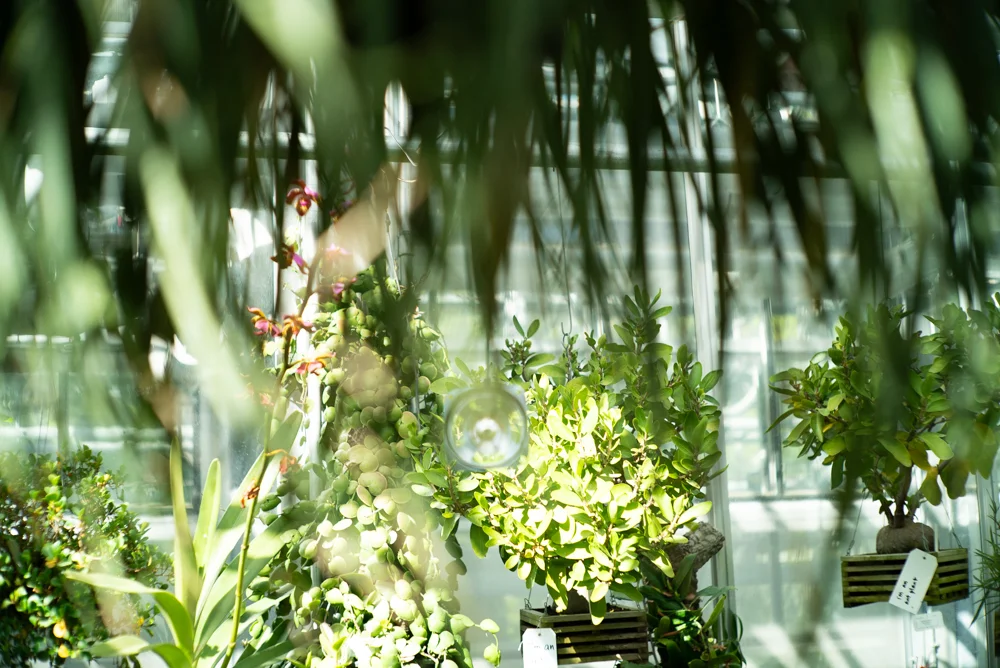
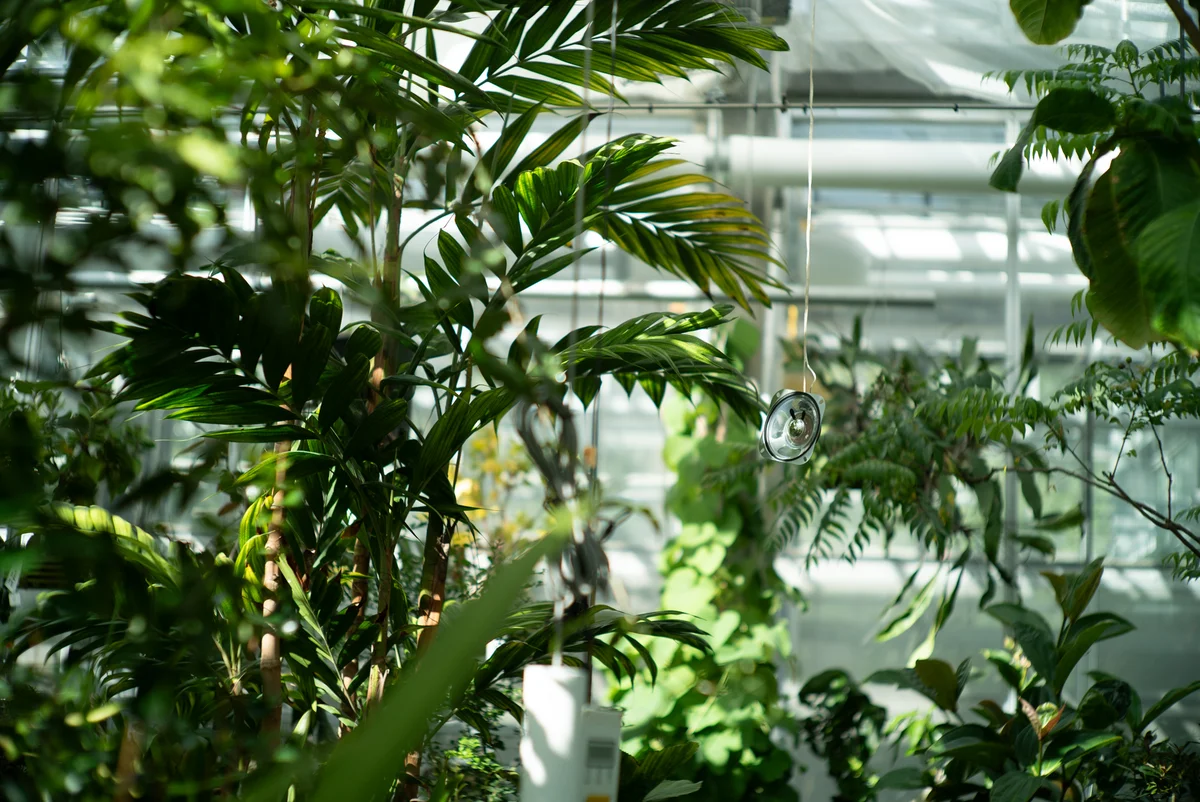
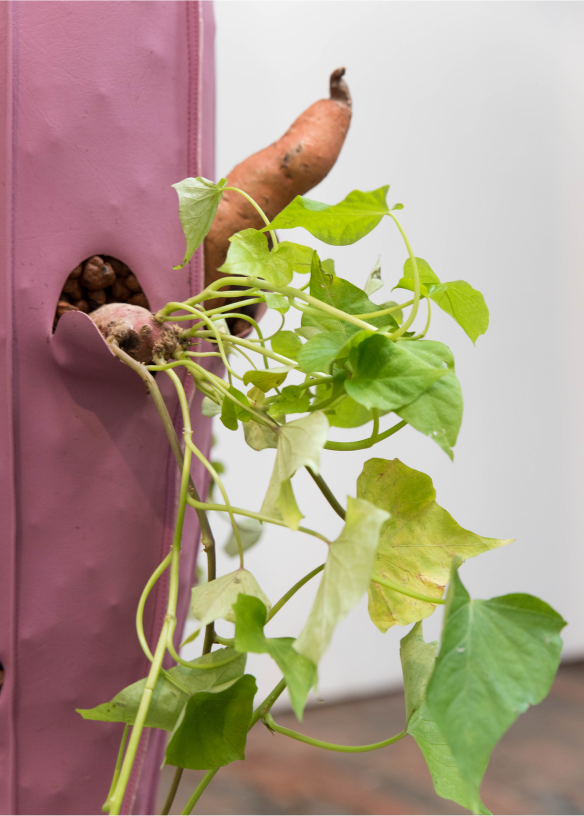
Collective notes "UnCANNY GARDEN" GREENHOUsE UW Seattle

Collective Notes by Hertz and Thrän focuses on songs of climate protests from the Global Week of Future of 2019, as well as the local climate zones they wish to approach. It is a planetary perspective: What are the connecting lines between protest songs and local climate zones and the animals and people living there? What common sound logics do global protests follow, and what is the rhythm of us and our environment? Both artists have accumulated a wealth of material in their practice, especially in the form of sound recordings. Samuel Hertz works in the field of bio-acoustics. Maria Thrän conducts sound-based field research. In the joint working process they bring their material together and search for overlaps and differences in terms of rhythms and frequencies.
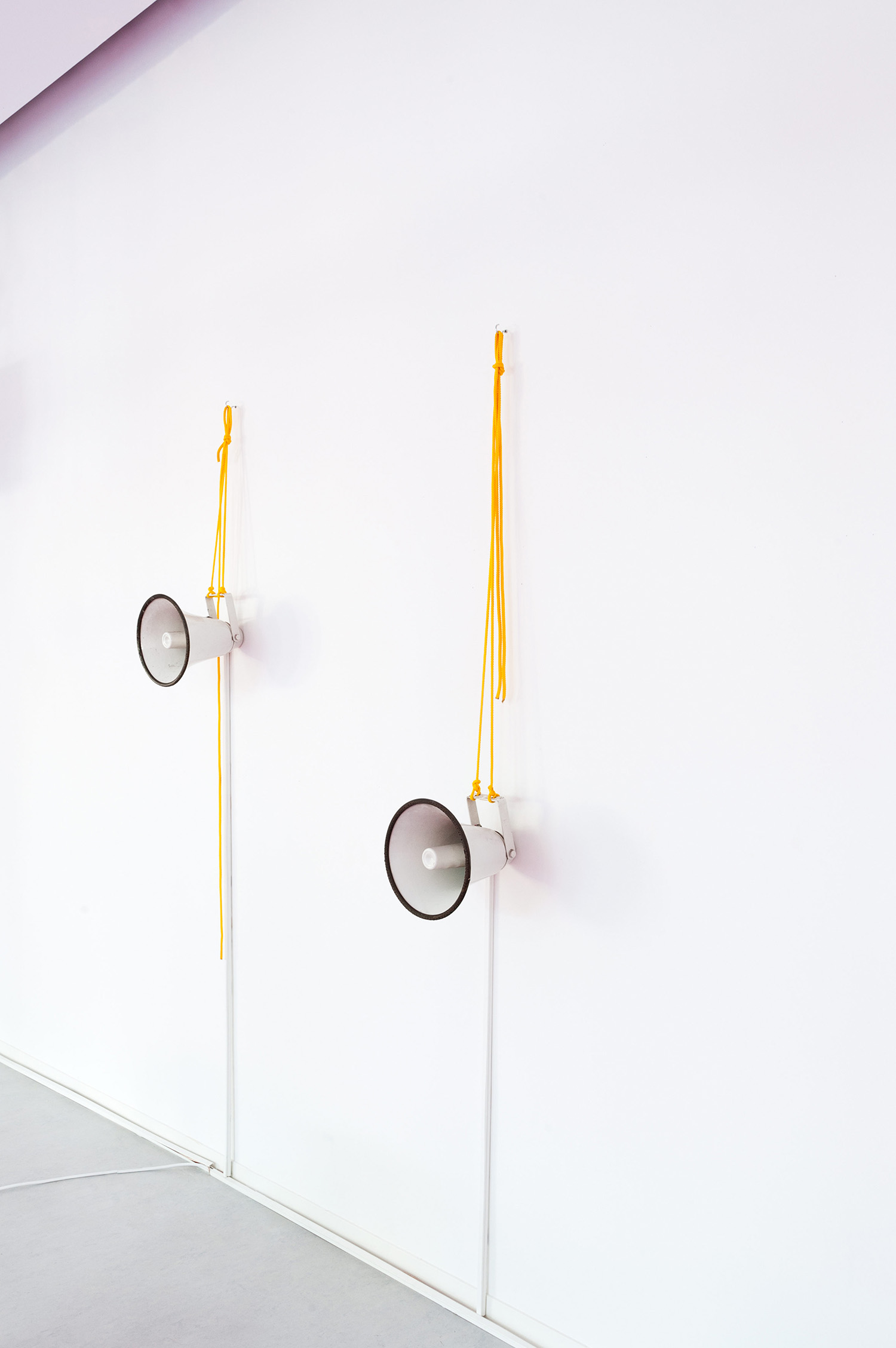
The starting point of their artistic research is the climatic zone of Berlin, more precisely the Rummelsburger Bay. Here Hertz and Thrän have recorded numerous sound and video sequences. Hertz translates them in exchange with Thrän into a multi-channel sound work consisting of eight loudspeakers. Voices of human agents can be heard, for example from the climate activists of the Global Week of Future of 2019, and non-human agents, such as birds or insects from the nature reserves in the Rummelsburger Bucht. Environmental sound mixes with protest documentation and sound generated using machine learning analysis of both categories. The experimental archive bears witness to a man-made crisis, the potential intelligence of nature and machines and the ways in which the sounds of human and non-human agents are interwoven.

Exhibition and archive space are divided by a curtain onto which Thrän's fragmentary video is projected in 9:16 cell phone format. The footage is a visual notepad. Thrän superimposes images and videos of various documentary scenes of climate protests and nature stock videos onto her nature footage from Rummelsburg Bucht and relates them to each other through a play on light and rhythm. A rhythmic flickering of tweets interrupts the viewing of the nature shots. A disturbance-free engagement with nature as a purely abstract category is denied to the viewers. The scrolling tweets attest to the political component of the subject and the polarizing and memeified engagement with climate protests on the social media channel Twitter. Social media discussions are central to how we engage with discourse today, but are almost impossible to archive in their plurality. Here, too, Hertz and Thrän ask about the possibility of experimental archiving as a potential of the visual arts as well as about possibilities of sustainable reuse of existing material.

The view behind the curtain allows us to see into the working environment of the artists. At the beginning still very simply equipped with a table, chairs and a screen, this will also change over the time of its use. During the open days of the exhibition, the public can talk to the artists or watch them at work and explore the archive. Two talks frame the exhibition discursively: at the opening with Kirsten Reese, a composer and sound artist, and at the closing with Rebecca John, an art historian.

MORE ART WORKS

Arrow pointing to upper right corner

Thrän's artistic focus lies at the intersection of visual arts, music, and experimental research. Her works reflect on ecological and social dimensions and always incorporate the diverse relationships between space and body.

ON(e) Distance

Works