

Maria Thrän

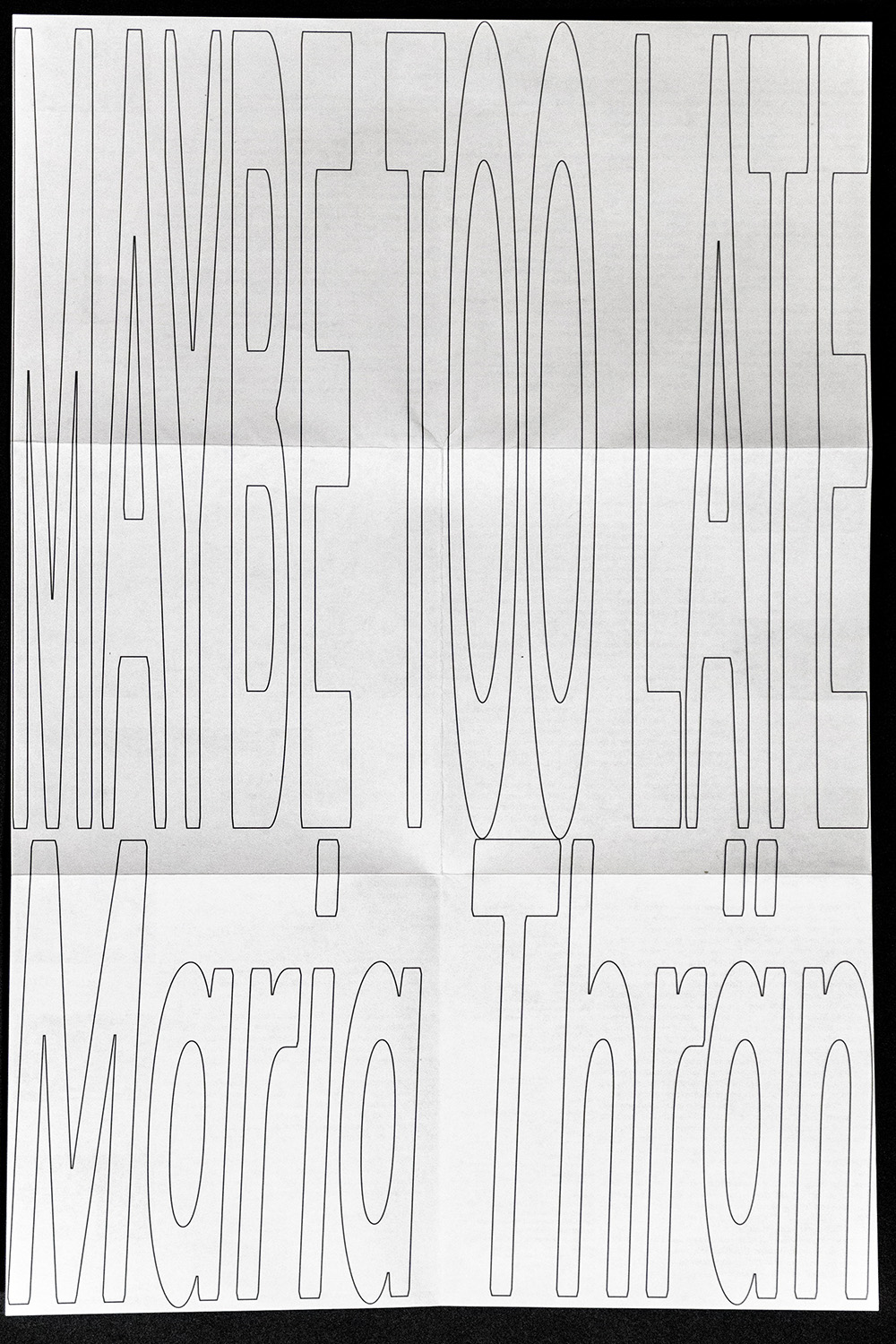
MAYBETOOLATE · 1822-Forum / Frankfurter Sparkasse, Frankfurt am Main, 2017
MAYBETOOLATE
Kinetic Sound Installation 2017
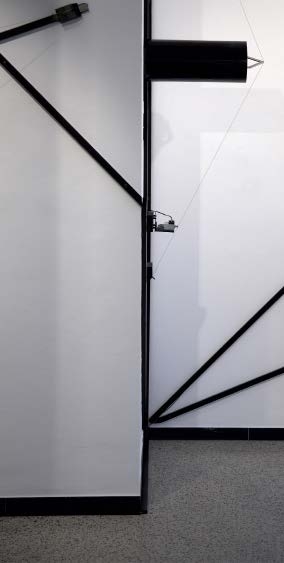
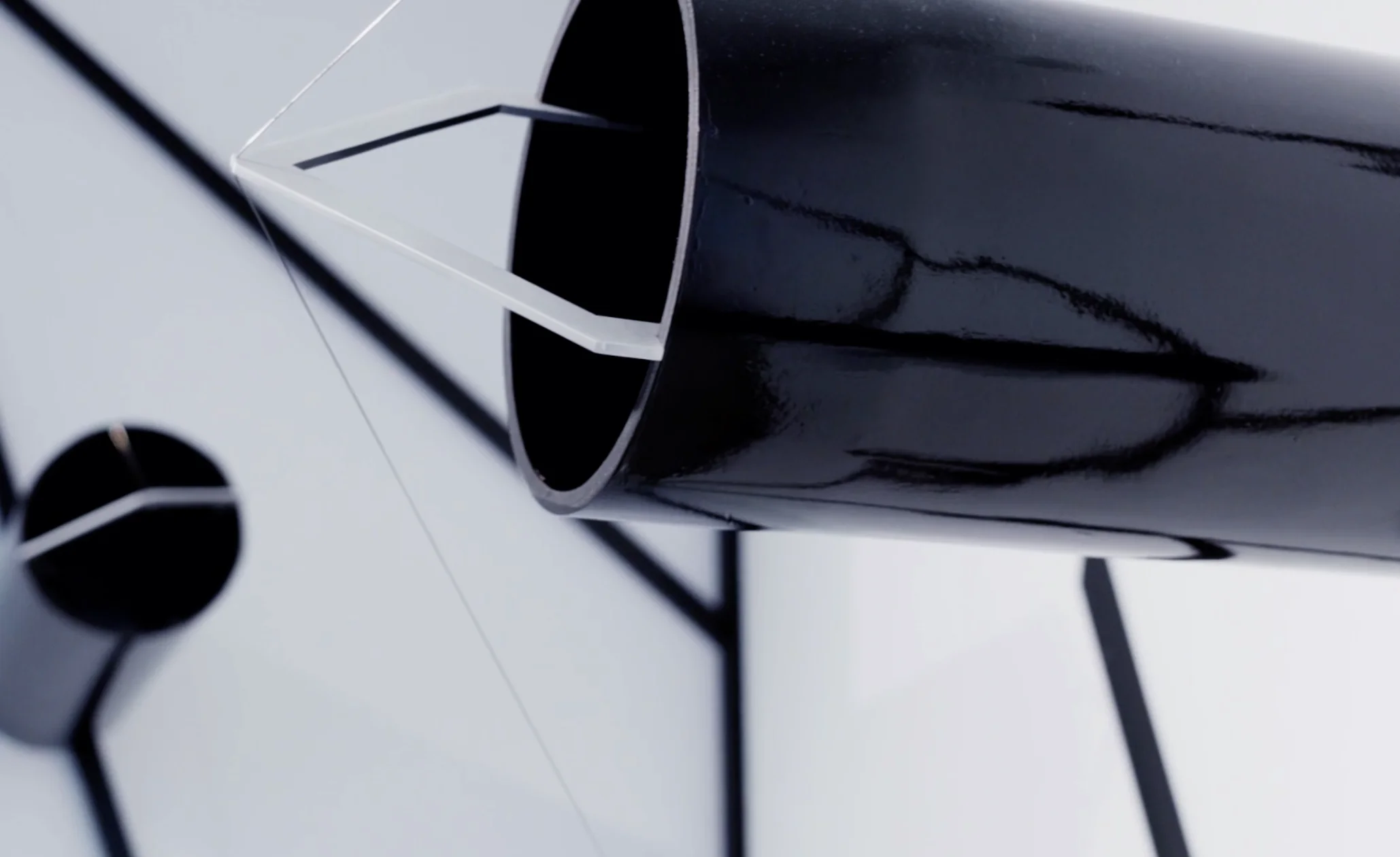
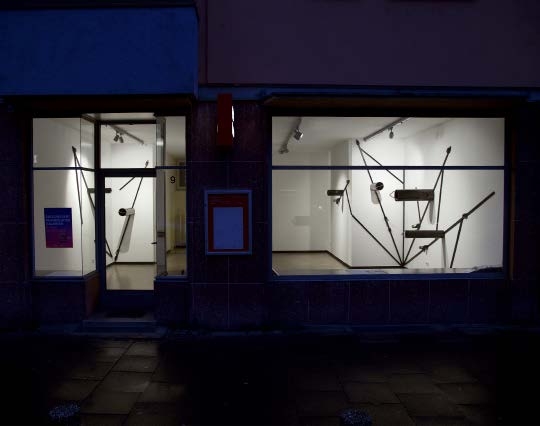

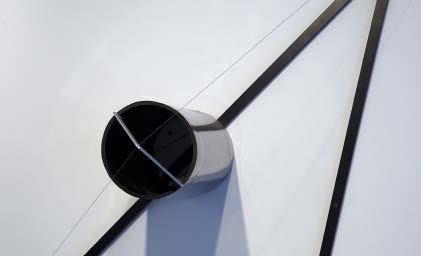

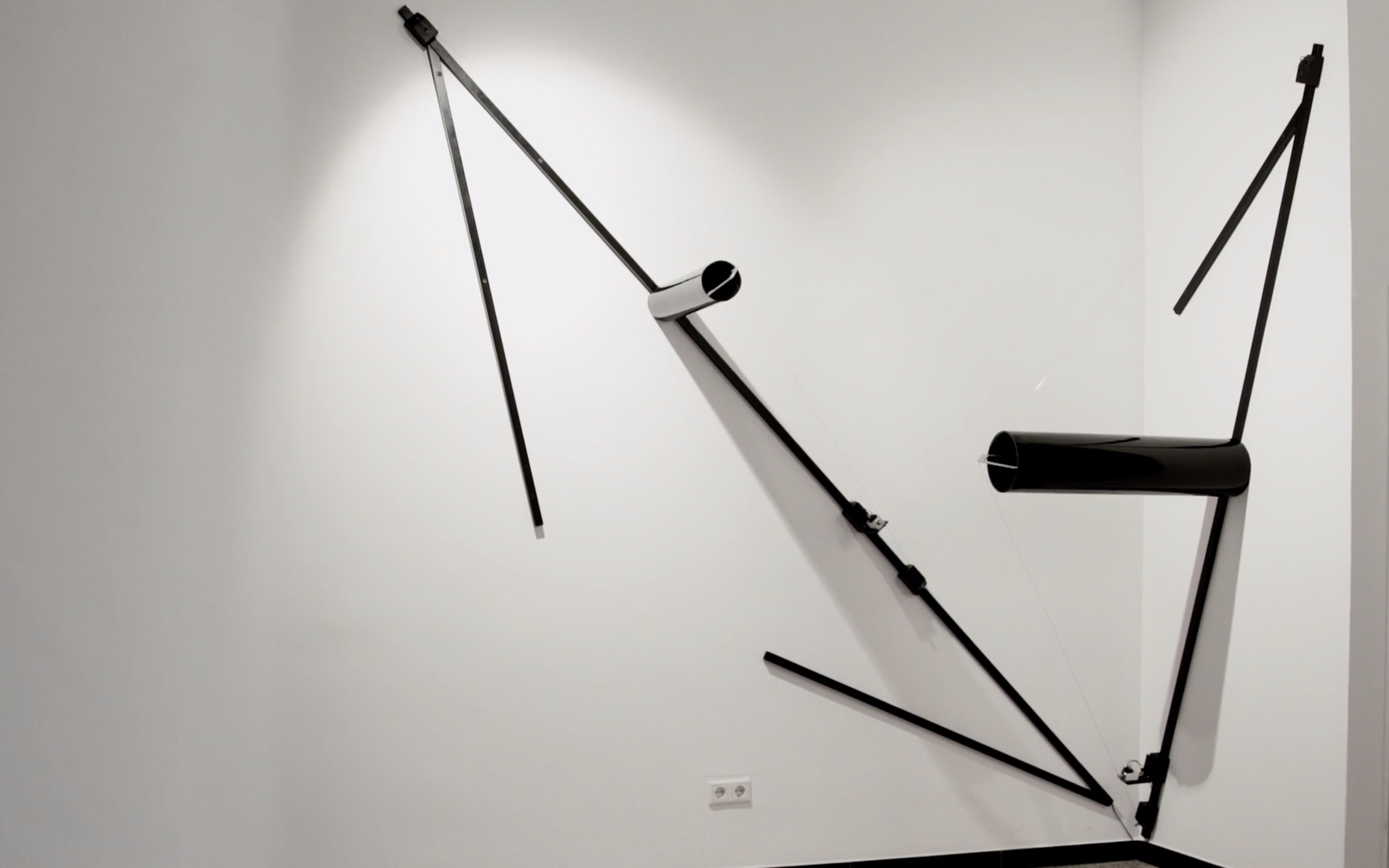
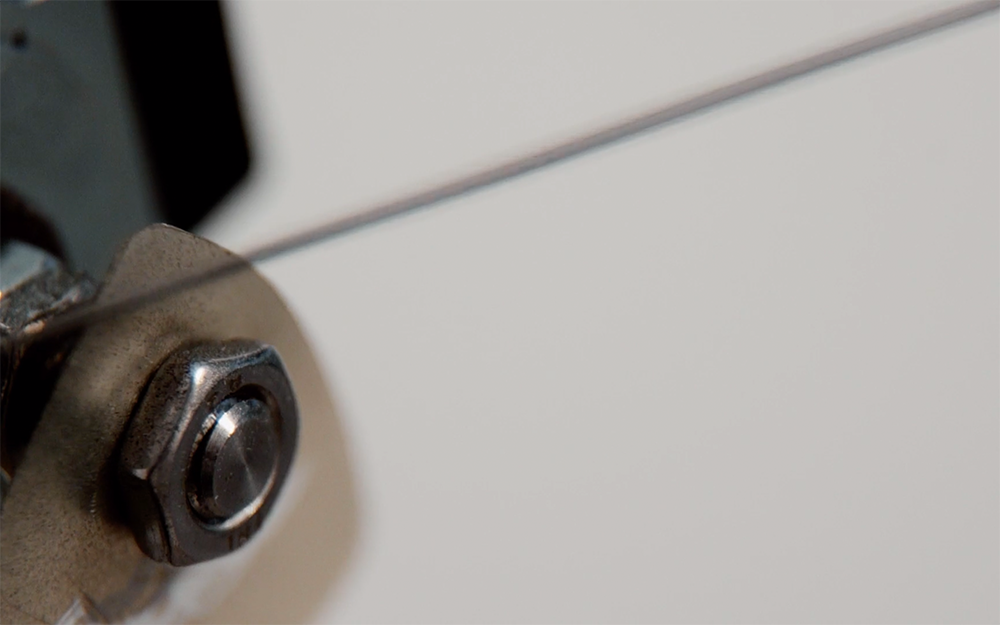
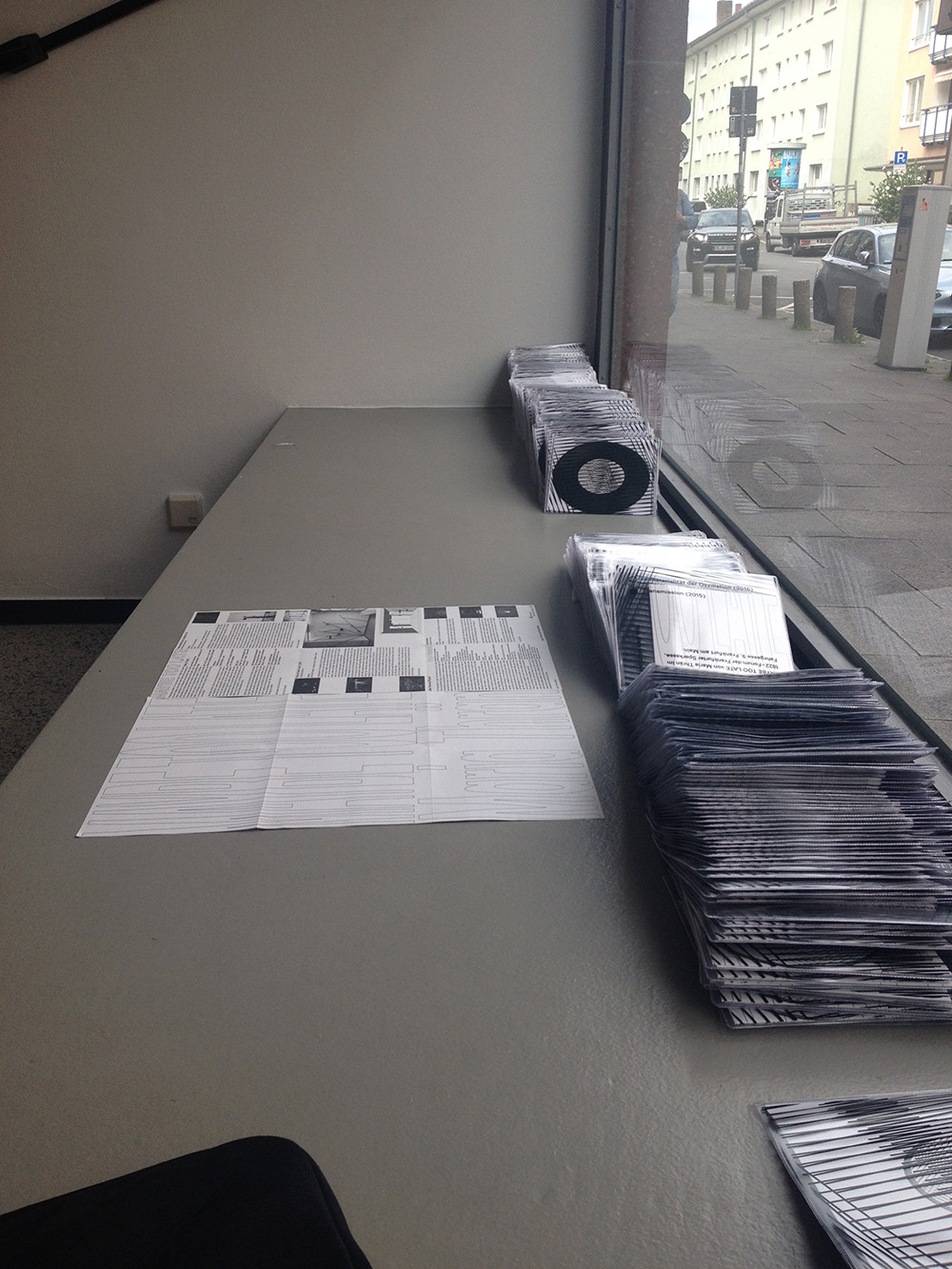
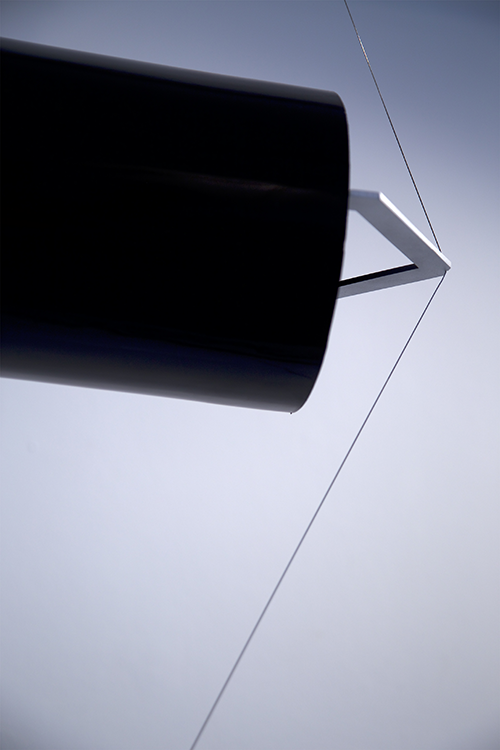

Six individual piano strings stretch through a modular black aluminum structure. Magnets lift and release them, and handmade wooden resonators carry their vibrations acoustically into the room.
Played live or controlled string by string, MAYBETOOLATE questions the formal structures of a gallery and asks who we connect with when we listen together. For this exhibition, I invited different artists to enter into a shared conversation with the work. Tobias Hagedorn composed a piece for the strings: six notes over seven note lengths. Because the two never line up, the melody keeps shifting. The music is deliberately quiet, endless, so the work never becomes just an instrument and stays open to interpretation.
Drawing on Japanese Metabolist architecture, the installation uses rearrangeable parts to question fixed structures and forms of cultural exchange. Visitors listen as they move: distance, position, and the gallery’s architecture change what reaches them. Listening takes place through relations among body, object, sound, and space.
Materials: modular black aluminum structure, steel piano strings, lifting magnets, handcrafted wooden resonators Electronics: Raspberry Pi, Arduino, MOSFET shield Software: Pure Data Format: kinetic sound installation
Production: Frankfurter Sparkasse Forum / Maria Thrän
Artwork: Maria Thrän
Composition in Sparkassen Forum: Tobias Hagedorn
Technical support: OK Werner Lorke, Stephan Blance
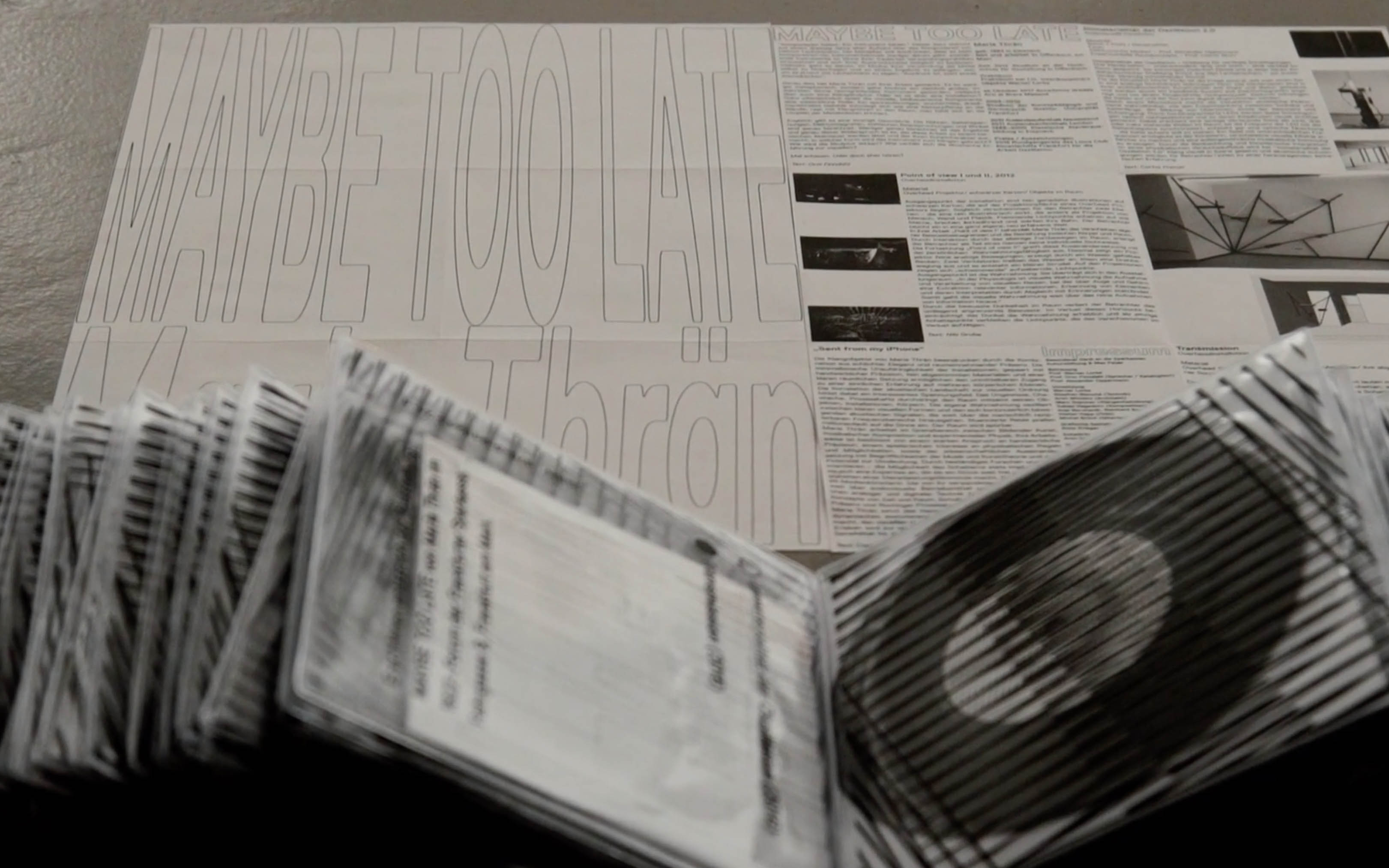
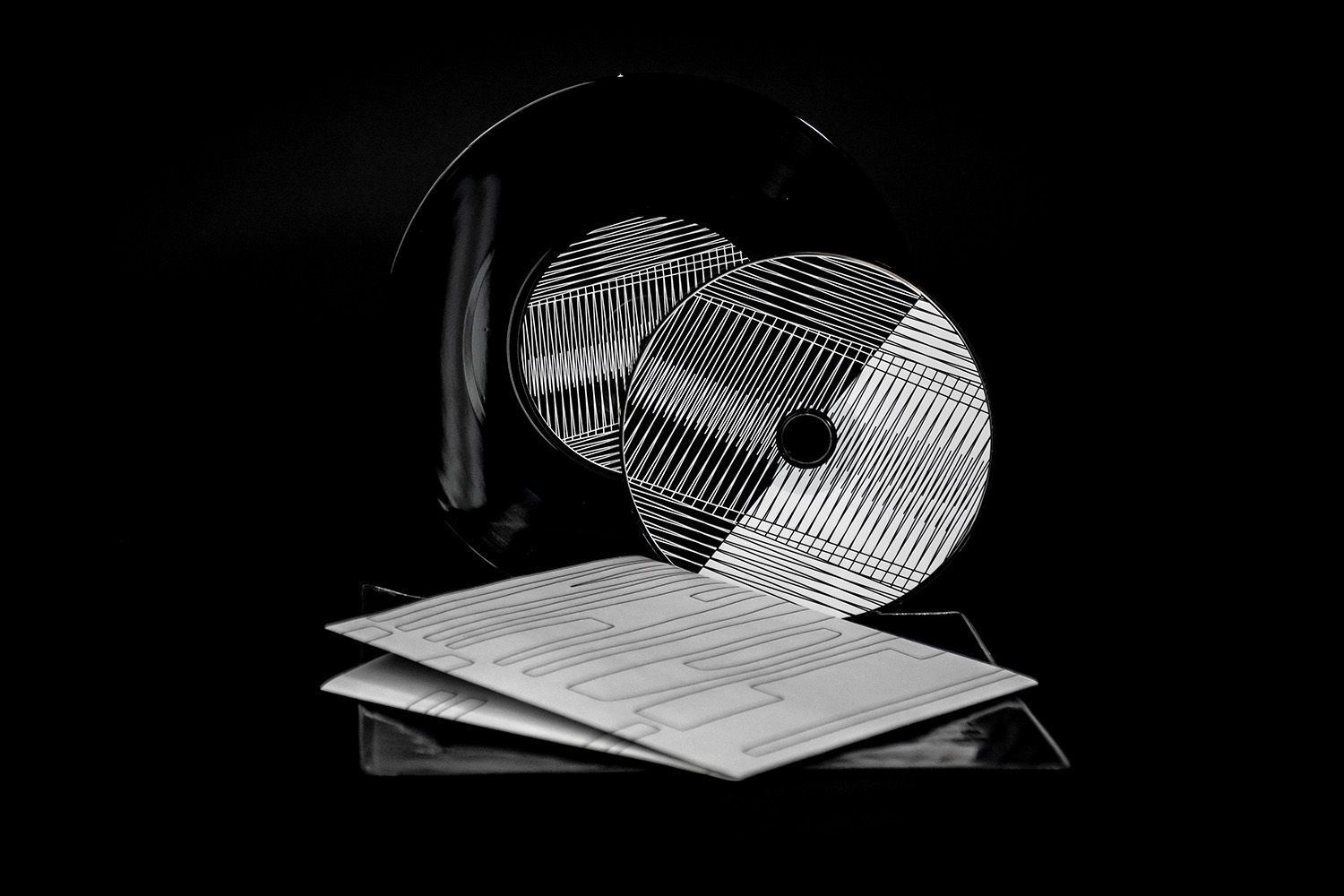
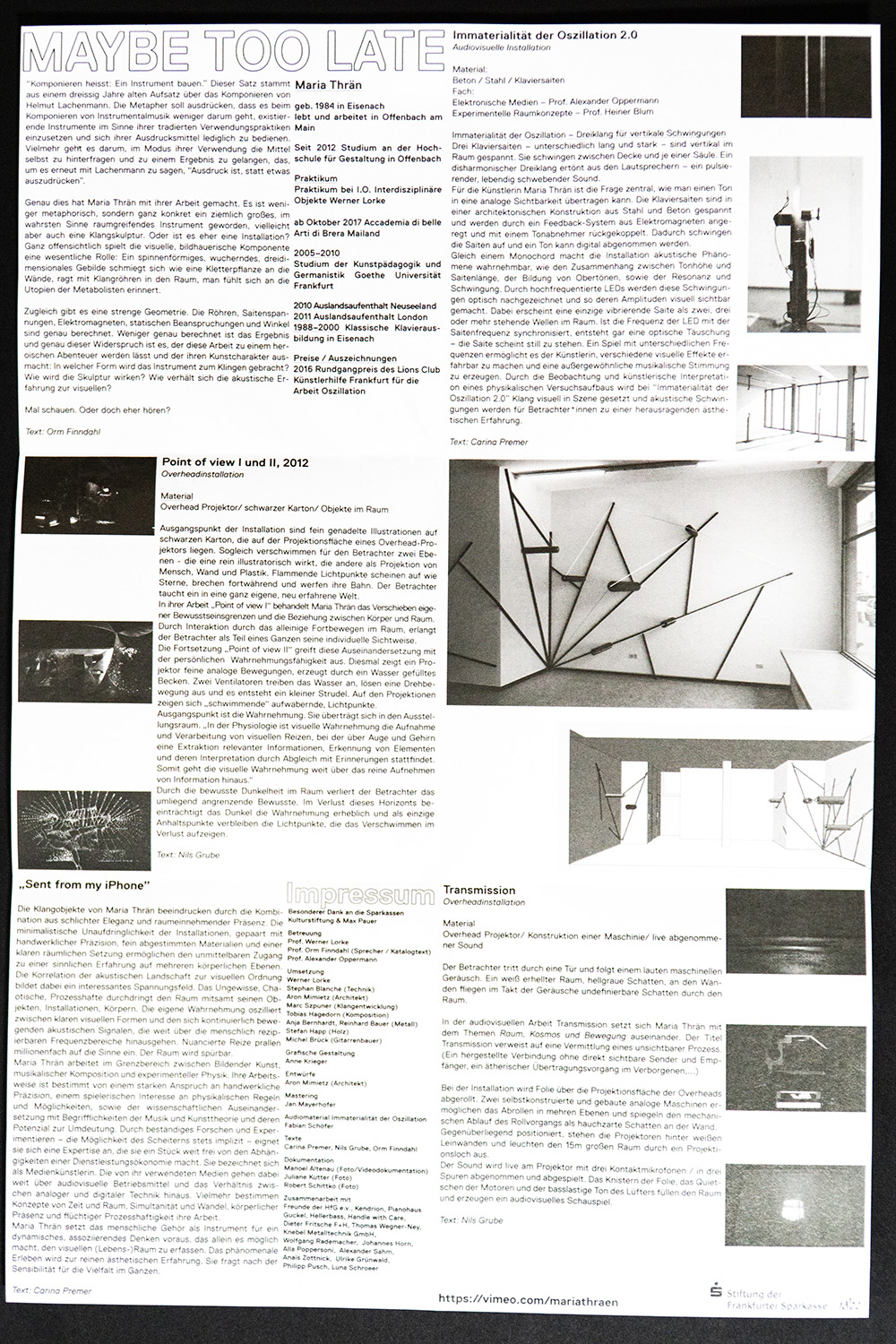
Exhibition catalog: vinyl record / design by Anne Krieger
Master vinyl record: Jan Mayerhofer
Exhibition text / speakers: Prof. Orm Finnendahl / Carina Premer
Architect & 3D: Aron Mimietz
Video documentation: Manoel Altenau
Photography: Philip Push, 2017
Solo exhibition: 1822-Forum / Frankfurter Sparkasse, Frankfurt am Main, August–September 2017. Exhibition fully funded by Frankfurter Sparkasse.