

Maria Thrän
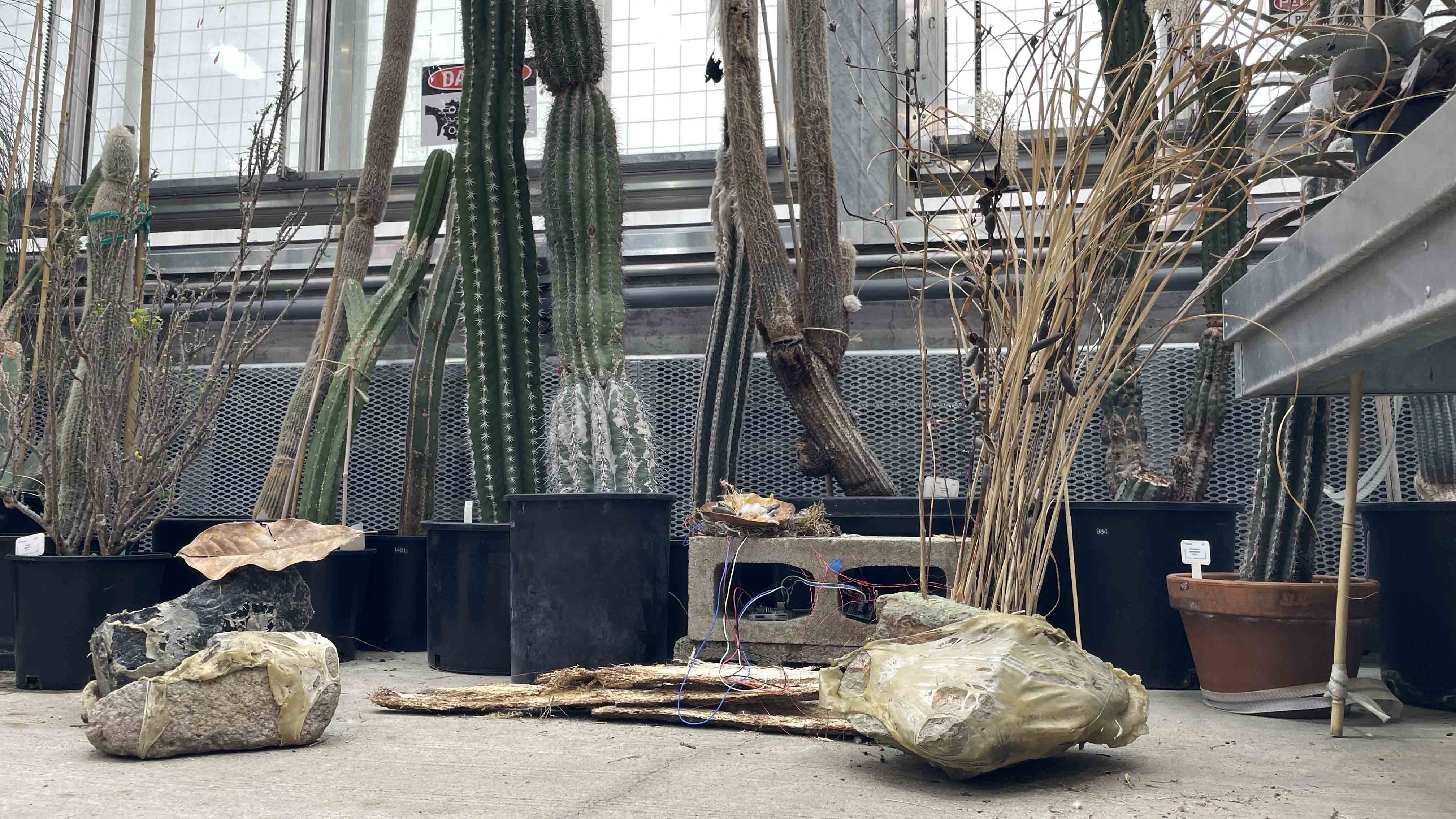
My Body Knew · Greenhouse research exhibition, University of Washington, 2026
My Body Knew
Kinetic Sensing Sculpture 2026
My Body Knew grew out of a childhood memory: walking through the fields in Dankmarshausen, on the hill above our street. In late summer, the grass was golden. I was only a little taller than it and loved running through it, letting the tips glide through my fingers, bending the stems and listening to their sounds with the palms of my hands. Driving in thought, I moved through the grass with my whole body.
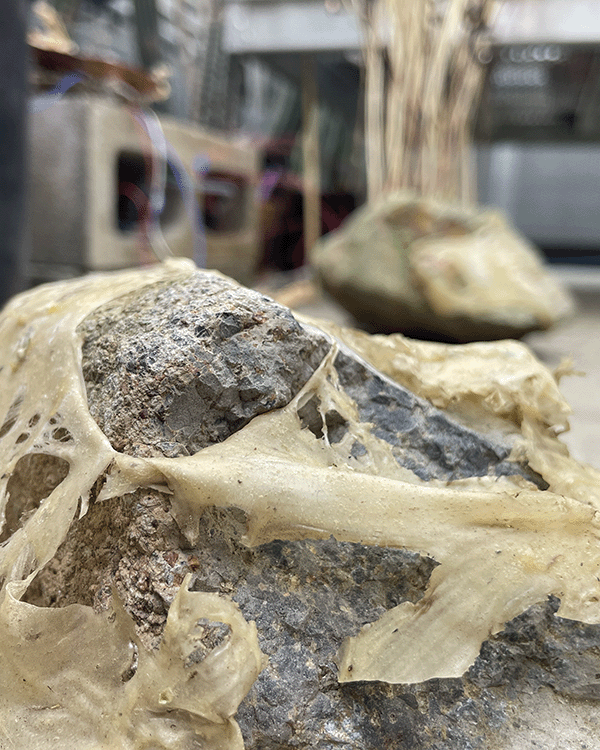
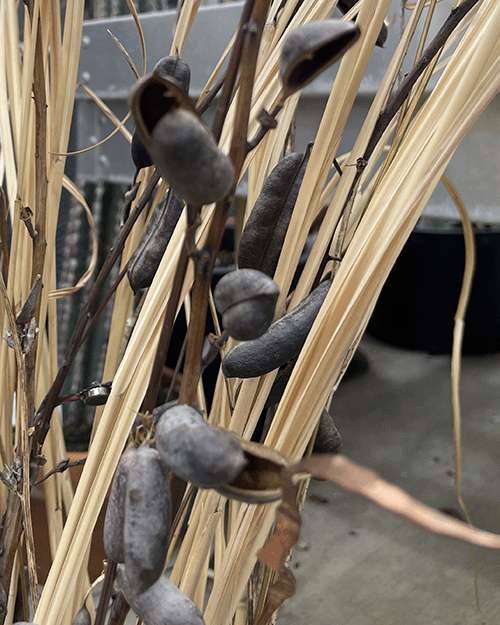
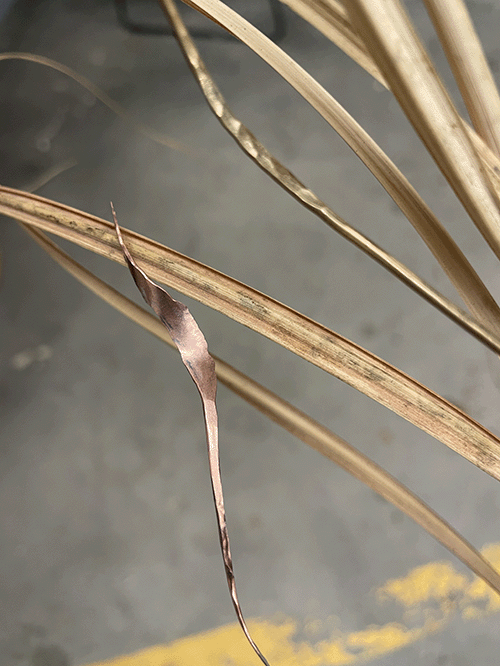
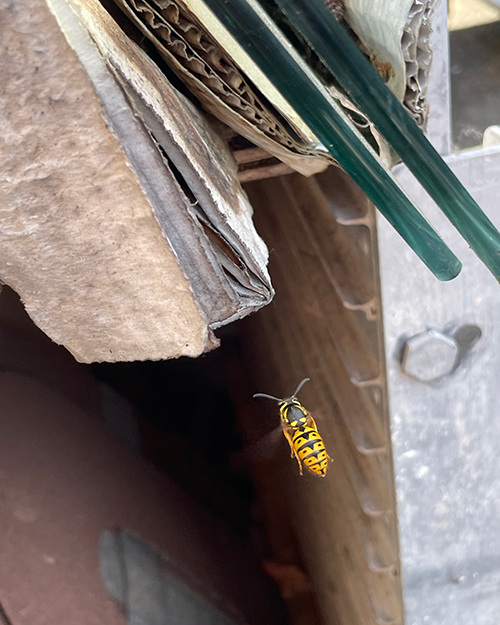
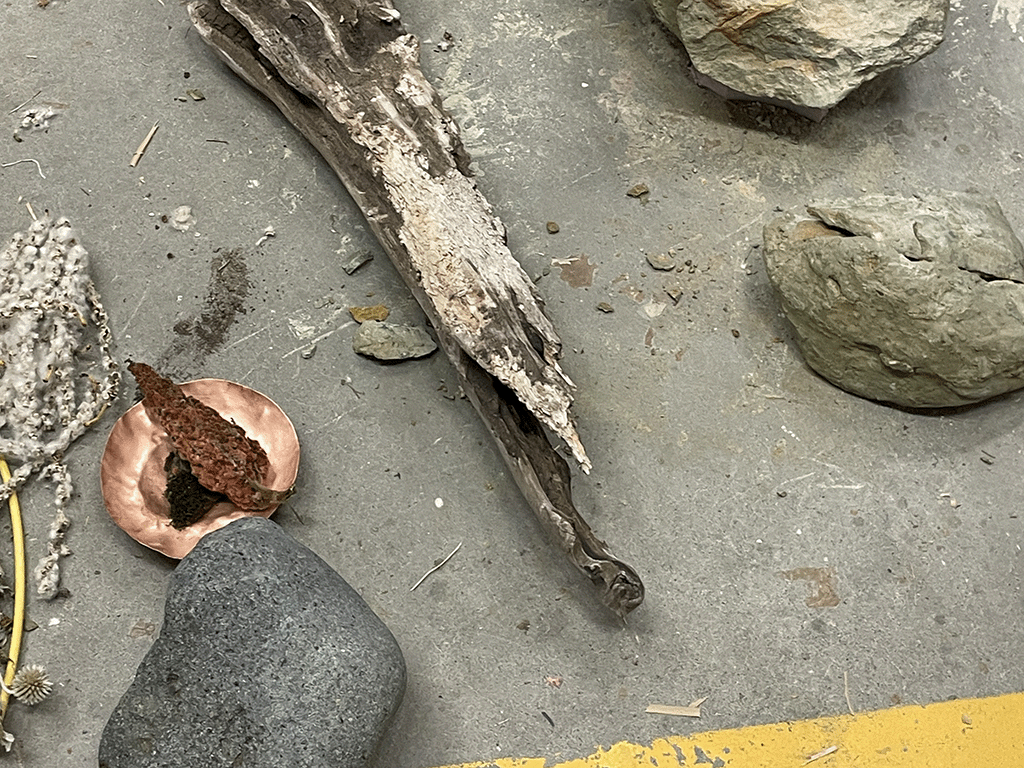
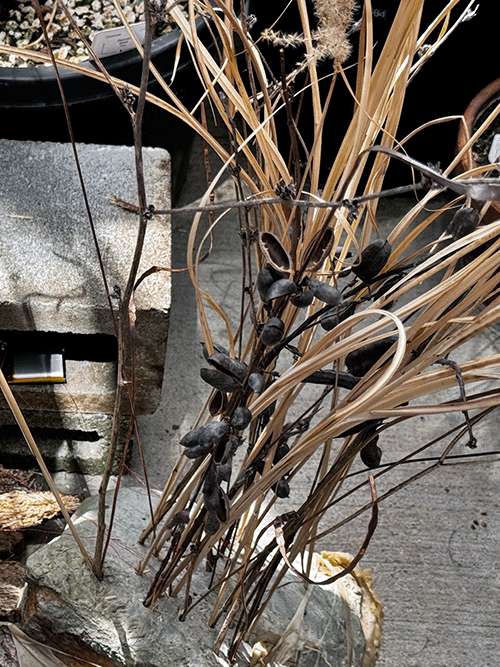
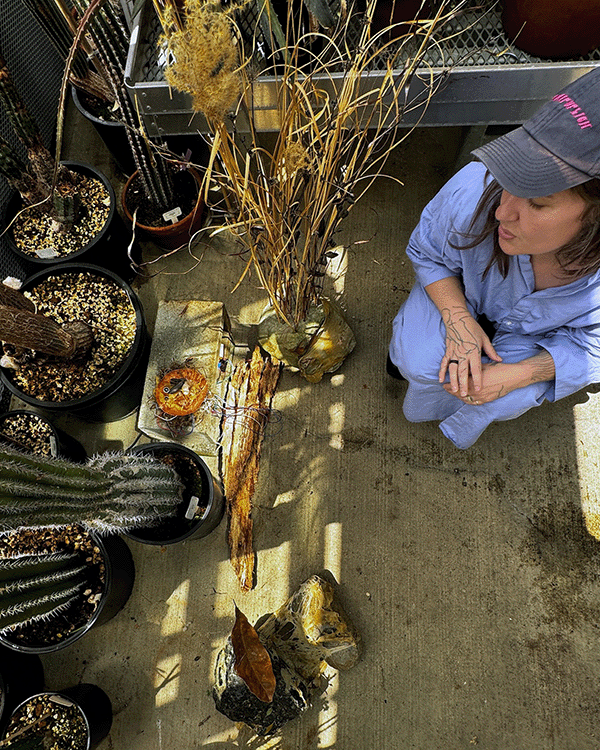
The kinetic sound sculpture combines a stone from a Seattle wetland, dried reeds and seedpods, copper, brass, and latex. Small vibration motors produce dry rattling and crackling sounds. An ultrasonic sensor responds to visitors’ proximity: as someone approaches, the movement slows until the sculpture falls quiet.
I found the seedpods on the street, where my neighbour had left them. Their rattling sound drew me in. Seeds and seedpods are used to make music in many cultures; my own encounter began with listening to what these particular materials could do. As I touched and worked with them, the sculpture began to feel like a creature coming alive. Touch became a way of discovering its movement, sound, and character.
The work also grew out of ritual performances and time in my studio beside Seattle’s wetlands, on the homelands of the Duwamish and other Coast Salish peoples. Dankmarshausen, where I grew up, lies along the former inner-German border, in a landscape shaped by surveillance and restrictions on movement. I do not equate this history with Indigenous dispossession. Working in Seattle asks me to consider my own presence on Indigenous land. Part of my ongoing research Shedding Senses, it asks how gesture, material, and vibration carry memory when the performer’s body is absent.
How does material sound, and what gets amplified? Listening happens through movement, distance, and attention. As the sculpture becomes quiet, visitors encounter their own presence and must adjust how they listen.
Presenting the work in the University of Washington’s greenhouse brought these questions into a place where plants are collected, classified, and cared for under controlled conditions. I thought about European botanical gardens and their greenhouses, where the cultivation of plants from other continents is entangled with histories of colonial collecting and economic exploitation. Institutions such as Kew and Berlin’s Botanic Garden helped move plants and botanical knowledge through colonial networks and supported plantation economies. Bringing materials gathered in Seattle into the greenhouse also made me question my own acts of collecting and arranging, and my presence on the land the university occupies.
In this setting, the sculpture reverses the expectation that coming closer gives us greater access. Its whisper withdraws. To hear it, visitors must give it space and adjust their own presence. Thinking with Raven Chacon’s work on sound, access, and power, I ask: who gets amplified, who remains unheard, and who is willing to make space?
Studio & prototyping
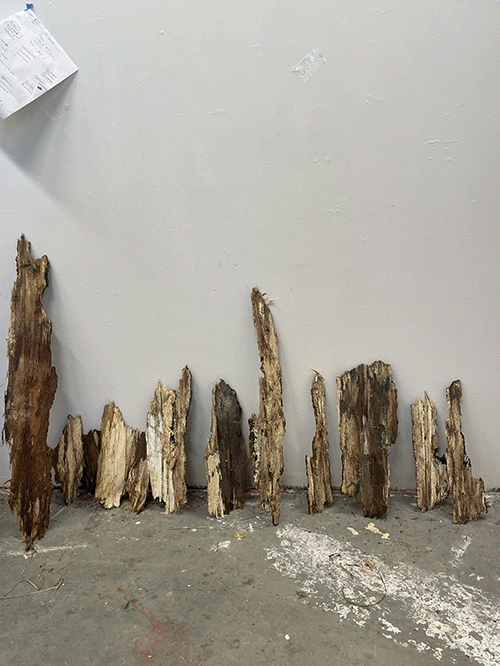
Working in my studio beside Seattle’s wetlands reminds me of making things with my mum and dad as a child. I carry those embodied memories into my experiments with sound and electronics, exploring how materials sound when touched. My practice moves across body and land, rivers and cities, and develops through conversations and
support from my community.
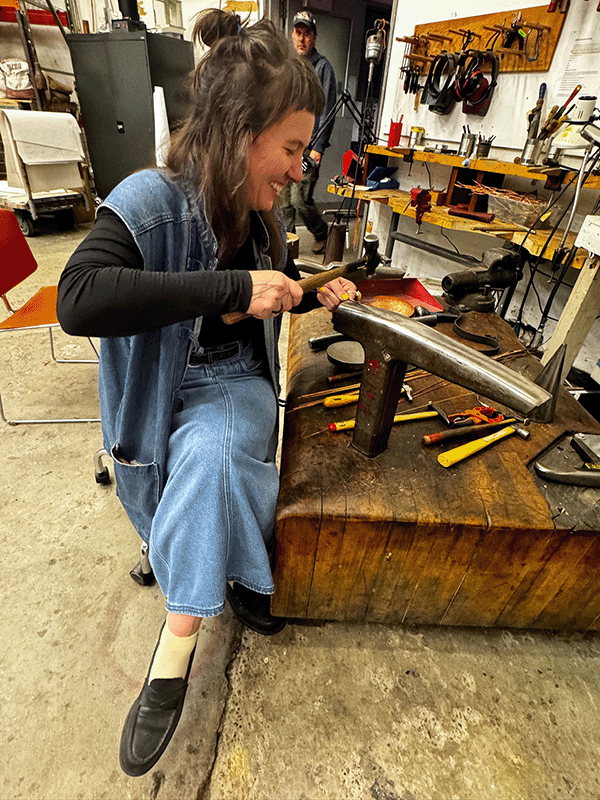
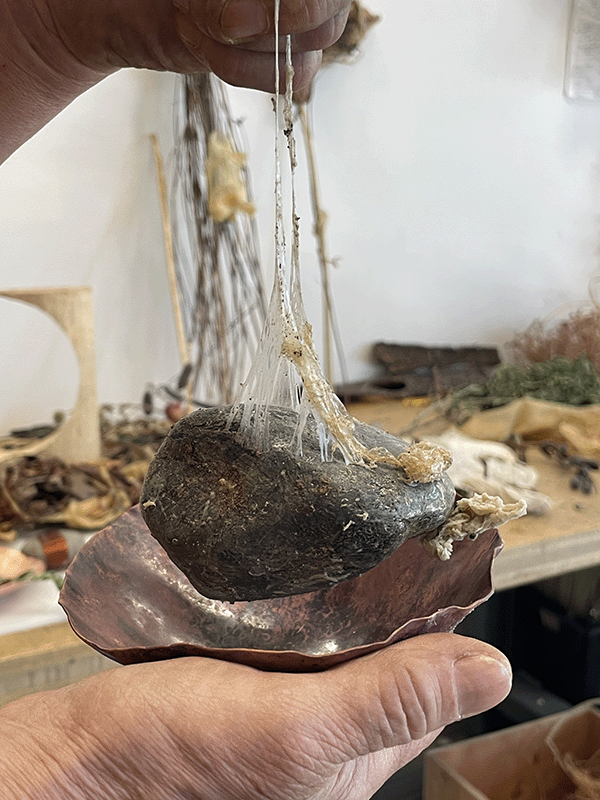
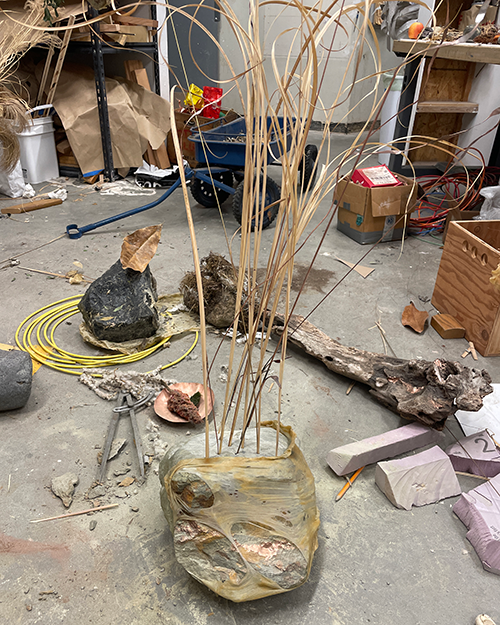
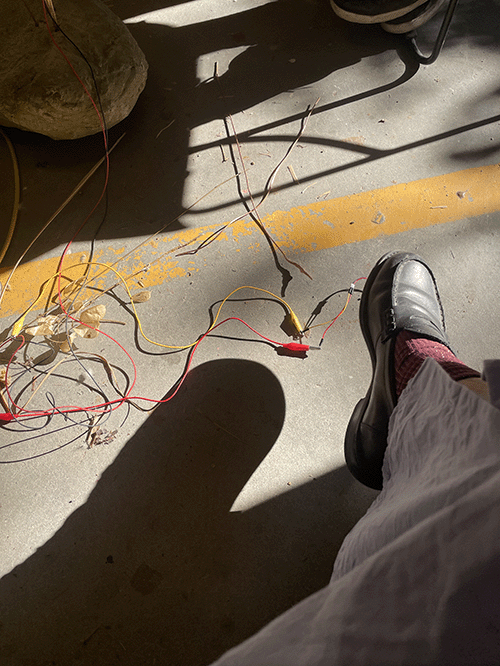
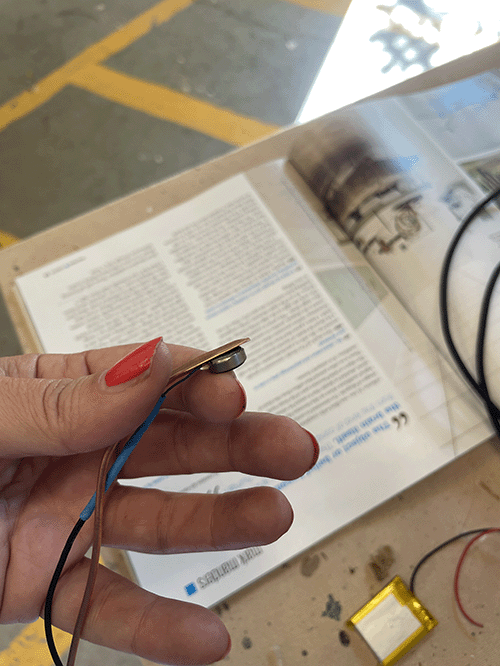
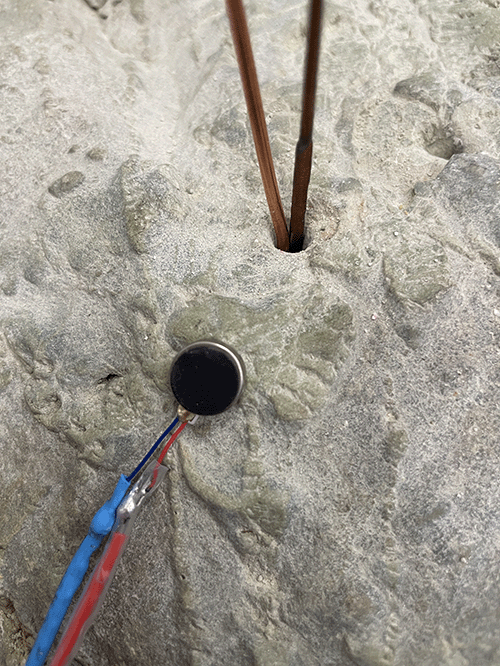
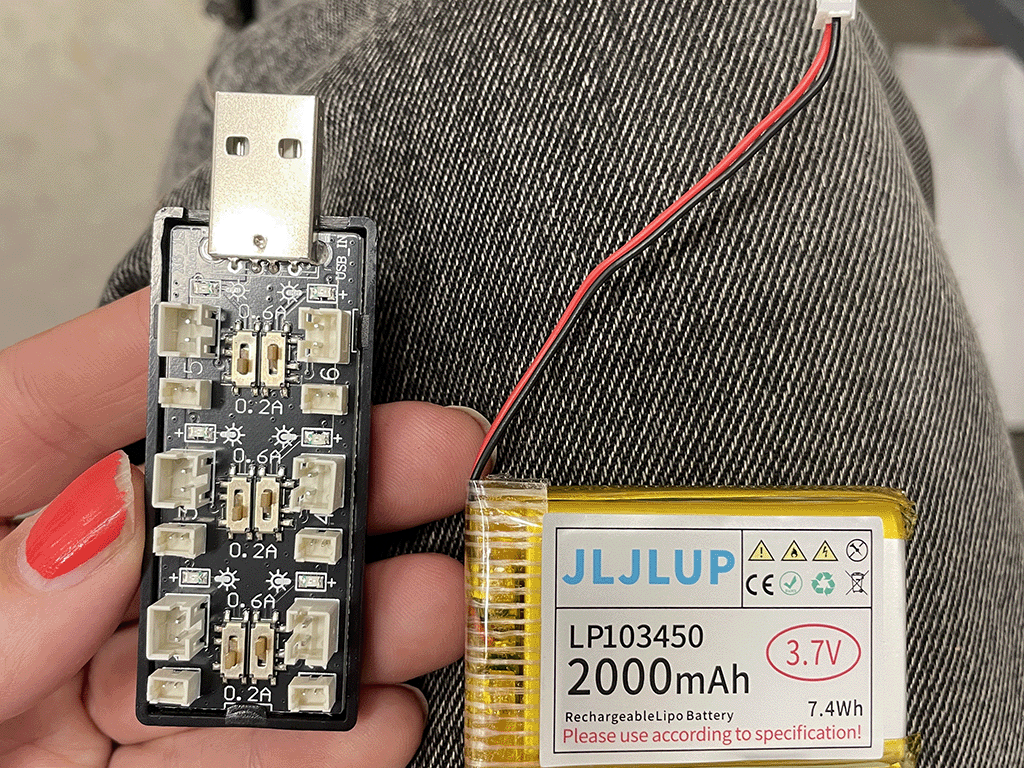
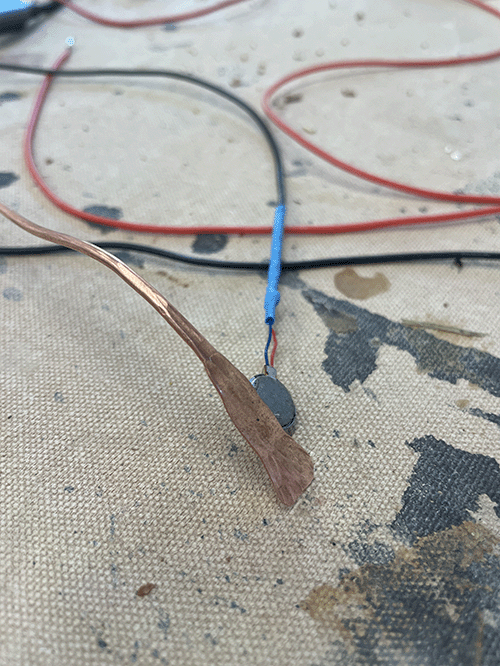
Materials: stone from a Seattle wetland, dried reeds and seedpods, copper, brass, latex Electronics: Arduino, ultrasonic proximity sensor, vibration motors, batteries Format: kinetic sound sculpture Year: 2026
Artwork: Maria Thrän Research: Shedding Senses, ongoing doctoral research
Exhibition: University of Washington greenhouse, Seattle
Support: Amie McNeel
Interaction: movement and sound slow as visitors approach, until the sculpture falls quiet.